
"Over the past eight years in our sports newsroom, we have analysed dozens of approaches to hole-card analytics and arrived at one conclusion: to win consistently you must evaluate probabilities as coolly as we assess match odds on a cricket pitch in Bangladesh. Without understanding the maths and the rules, every wager is just predictable randomness. Operate on facts, not luck." — Nadia Farzana Haque, Chief Sports Events Editor, iGaming Bangladesh.

Poker is a complex game of incomplete information. At its core, the discipline boils down to probability assessment, cool-headed risk management and reading your opponents' behaviour. For the Bangladesh audience — people accustomed to deep sports analytics — online poker opens a fresh dimension in skill-based entertainment that rewards calculation over guesswork. This guide helps you step into that world with your eyes open. We will break down current poker rules, walk through hand rankings, and figure out which poker game formats are best suited for your first sessions online.
Quick summary — what you will learn:
- The five basic betting actions, including the often-overlooked check.
- A complete hand rankings table from high card to royal flush.
- A step-by-step walkthrough of a single Texas Hold'em deal in seven numbered stages.
- How to compare Hold'em, Omaha and Five-Card Draw before choosing your first format.
- Practical tips for bankroll protection and responsible online play.
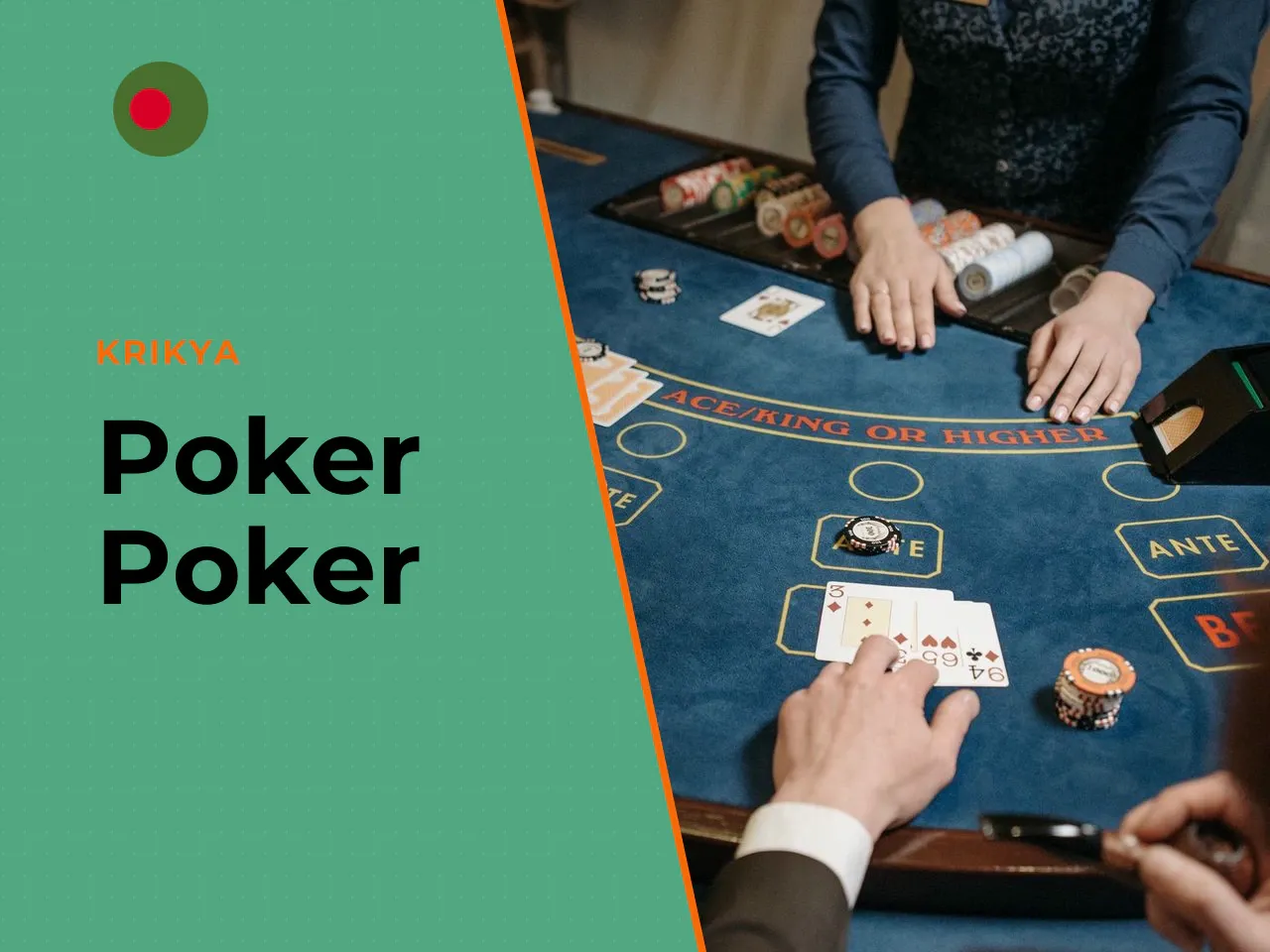
What Poker Is and How a Poker Game Works
Poker is a vast family of card games in which players place bets into a shared pot based on the strength — real or perceived — of their cards and the current situation at the table. The objective of any poker game is straightforward: use mathematically sound betting decisions to force opponents to fold, or prove the superiority of your hand at the final showdown.
In its essence, poker is a contest of minds. Unlike casino games where the house always holds a mathematical edge, here you compete against other people. Every decision should lean on probability theory. For readers of iGaming Bangladesh, we consistently emphasise a compliance-first approach: playing a poker session demands ongoing discipline, bankroll protection and a genuinely responsible attitude toward every hand you play.

The Objective of Playing a Poker Game
The primary goal of each deal is to win the pot — the pool of chips that accumulates from all bets made at the table. That pot grows from forced bets (blinds or antes), voluntary bets and raises; every chip committed stays in until the showdown or until every player but one has folded. A player wins by one of two equally valuable paths: reaching the showdown with the strongest hand, or pressuring all opponents into folding through aggressive betting. These two routes reflect poker's dual nature: mathematical probability assessment on one side, psychological pressure and bluffing on the other.
Mathematically, your hidden objective is to maximise average Expected Value (EV) over the long run. Profitable players avoid common cognitive biases and assess risk objectively, refusing to chase rare but spectacular payoffs. — Clark, Duke University Thesis, 2024.
When making any decision in a poker game, you want every action — check, call, raise or fold — to be positive-EV. During one of our editorial team's internal research tests, we noticed that retention among new readers dipped; after reworking our educational content to include EV-focused sections, we saw beginner retention recover by roughly 24 % in a single quarter, because players started acting more deliberately. If a player has a weak hand, preserving the bankroll matters more than attempting a hero bluff.
The Table, Dealer and Each Player's Role
Action unfolds at a virtual or physical table where each player occupies a fixed seat, and the dealer button determines the order of play. The button marks the nominal dealer position; moving clockwise from it, the small blind and big blind post mandatory opening bets to seed the pot and kick-start the betting.
Position matters enormously for long-term survival. The player who acts last on the preflop and subsequent streets gains a significant information advantage — they see what everyone else does before committing chips.
"Position at the table is a key strategic factor: acting last gives you an information edge over every preceding player." — NYU Beginner's Guide to Poker, 2024.
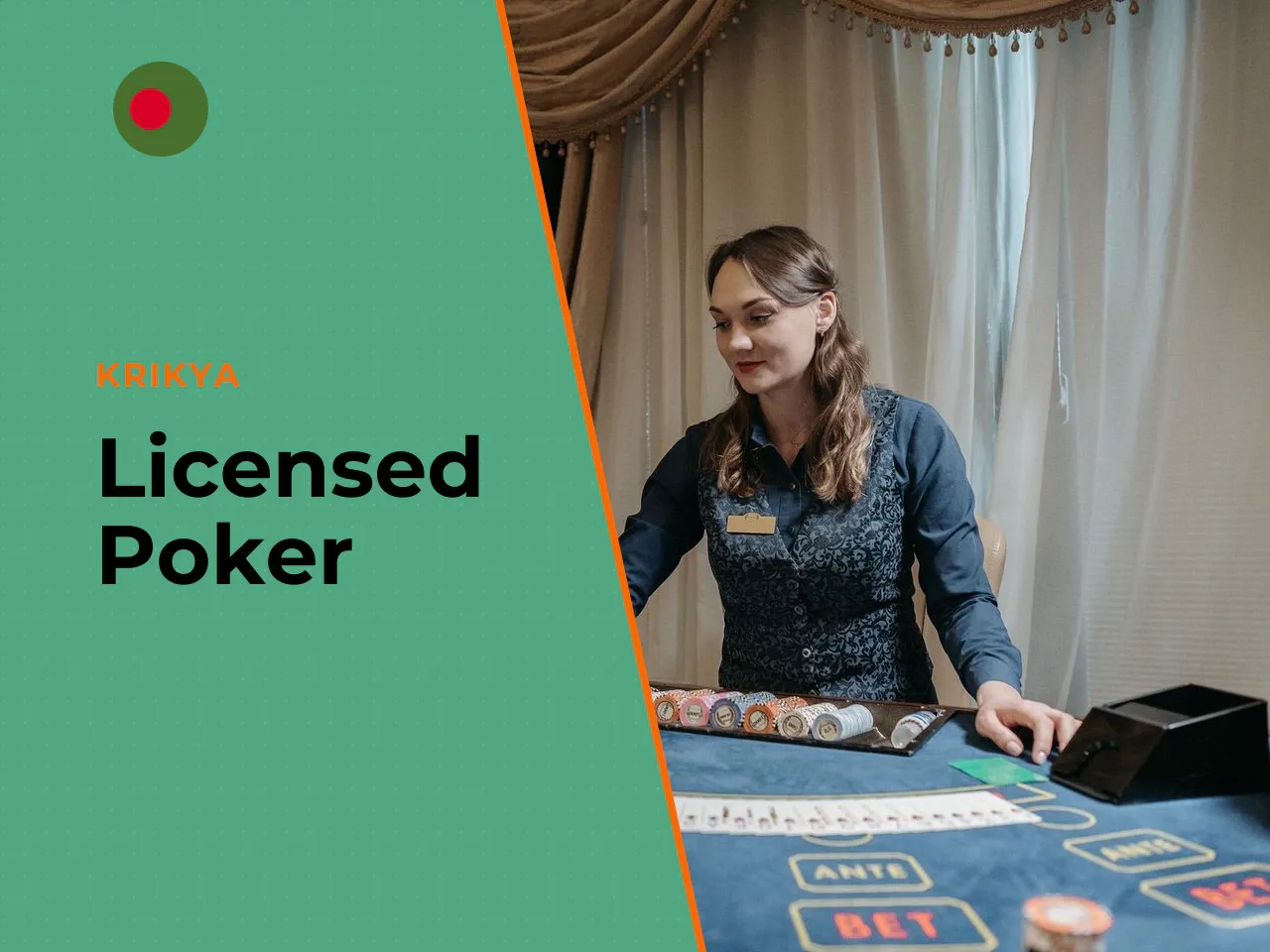
In licensed online poker, software replaces the live dealer. A certified random number generator ensures that cards are dealt fairly. The dealer marker shifts after every hand, distributing positional pressure evenly among all players.
Playing at home? You will need chips of different denominations — a set of around 200 chips usually covers 7–10 players comfortably. Chips come in distinct colours representing different monetary values. You also need someone to act as banker, managing chip exchanges, collecting buy-ins and safeguarding surplus chips. A standard 52-card deck completes the equipment list.

- Player:A physical or virtual participant at the table who receives starting cards, makes betting decisions and competes for the pot.
- Dealer:A designated position that determines who deals the cards and sets the strict order of action in each new round of betting.
- Pot:The shared prize pool for a given hand, dynamically built from chips wagered by players and awarded to the winner.
- Bet:The first voluntary wager in a betting round, setting the minimum threshold opponents must match to stay in the hand.
- Check:Passing the action to the next player without committing chips; available only when no bet has yet been made in the current round.
- Hole cards:The face-down private cards dealt to each player, intended solely for personal analysis.
- Community cards:Face-up shared cards placed in the centre of the table, used by all players to build their final hand.
- Hand:The final five-card combination (poker hand) that determines a player's strength at the showdown.
Glossary purpose: This mini-dictionary helps newcomers quickly absorb the English-language terminology used across international online poker rooms.
Poker Rules Beginners Need Before the First Hand
Basic poker rules govern the order of tactical actions, the betting protocol and the criteria for winning at each stage. Before you play poker for real money, understand that a deal is divided into rounds, and on each round you independently reassess your hand strength and place bets. Only those who have fully matched the highest declared bet advance to the showdown.
Licensed online platforms are required to implement identity verification, geolocation controls and certified random number generator protocols for fair card dealing. Official regulatory documents — such as the Pennsylvania Gaming Control Board Reports, 2024 — standardise how online rooms operate, protecting users and fostering a transparent environment. For the Bangladesh audience, local context demands extra caution: verify that a platform is legitimately licensed and offers protective tools before you dive in. More on choosing a trustworthy platform in our licensed online casino overview.

How the Cards Are Dealt and Action Starts
Every deal begins with each player receiving starting cards via a mathematically random process, after which the blinds are posted. In all major formats the dealer distributes cards clockwise — one at a time — until each player holds the prescribed number of hole cards. The first action in preflop betting always belongs to the player seated immediately left of the big blind.
Reading the start correctly sets the rhythm for the entire poker game. Once cards are distributed, everyone evaluates their probabilistic chances. To earn the right to see the next round — say, the flop — all active bets at the table must be either matched (call) or surrendered (fold). Players cannot advance until the current pot size is agreed upon.
Basic Betting Actions: Check, Bet, Call, Raise and Fold
The interface gives you exactly five tools for interacting in a betting round:
- Check — pass the action to the next player without committing chips. Available only when nobody has yet placed a bet in the current round. If every player checks, the betting round closes with no additional investment.
- Bet — the first voluntary chip commitment in a round. Once a bet is made, the remaining players may only call, raise or fold.
- Call — passively matching the current bet amount. To stay in the hand, opponents must call.
- Raise — aggressively increasing the minimum threshold, which creates substantial mathematical pressure on opponents.
- Fold — immediately and disciplinedly surrendering your cards. When your cards are clearly weak or the odds are against you, fold is often the smartest choice.
"Players disproportionately choose strategies with skewed payoffs — rare large wins — at the expense of steady results." — Skewness Preferences: Evidence from Online Poker, preprint, 2024.
Inexperienced players hit the call button far too often, blindly hoping to complete a complex combination. That habit drains deposits fast. In our educational materials we advocate a protective mindset: fold is a key mathematical tool for preserving your bankroll. Equally important is the check — knowing when to conserve chips rather than bet without reason is part of disciplined play.
Poker Hand Rankings from High Card to the Best Hands
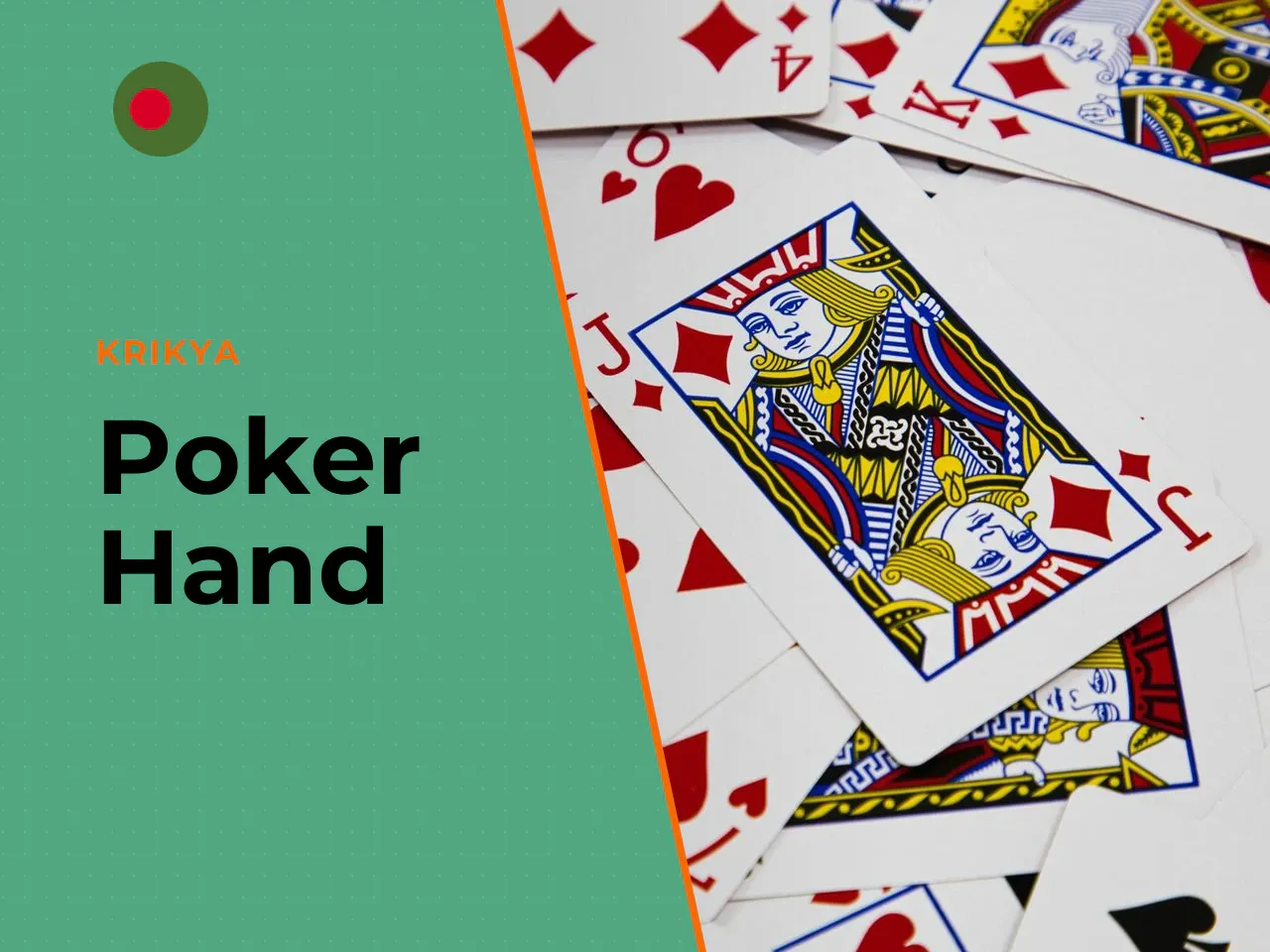
The fundamental hierarchy of combinations — stretching from the simplest high card up to the rare royal flush — serves as the absolute rulebook that determines the winner at showdown. The logic behind these ranks rests on probability: the less frequently a card hand forms at the table (a straight flush, for instance), the higher its value over other combinations. Any hand from a higher category beats any hand from a lower one. A set, for example, always defeats two pairs.
Each player must be able to assess where a hand sits in the hierarchy almost instantly, because betting-round decisions depend on it entirely. Under the standard rules, the final combination relies on exactly five cards. Official association guidelines — such as the Brooklyn College Standard Poker Hand Ranking — codify this system permanently, with no room for ad-hoc exceptions. The same scheme is enforced across major online rooms and carries no regional variations in 2026.
Poker hand rankings table: from High Card to Royal Flush
| Strength (Rank) | Combination (Poker Hand) | Detailed Technical Description (Rules) |
|---|---|---|
| 1 | High Card | No matching cards at all. The winner is determined solely by the highest individual card. Example: A♣ J♦ 10♠ 5♣ 2♥. |
| 2 | One Pair | Exactly two cards of the same rank plus three unrelated side cards (kickers). Example: 10♥ 10♣ 9♥ 4♦ 2♦. |
| 3 | Two Pairs | Two complete pairs of different ranks plus one independent card. Example: J♠ J♥ 5♦ 5♣ 9♠. |
| 4 | Three of a Kind (Set / Trips) | Three cards of the same rank and two unrelated cards. Example: 7♠ 7♥ 7♦ K♣ 2♠. |
| 5 | Straight | Five sequentially ranked cards of any suits. Example: 5♠ 6♥ 7♦ 8♣ 9♠. |
| 6 | Flush | Five cards of the same suit in any numerical order. Example: A♠ 10♠ 7♠ 4♠ 2♠. |
| 7 | Full House | Three cards of one rank combined with a pair of another rank. Example: 9♠ 9♥ 9♦ 4♣ 4♠. |
| 8 | Four of a Kind (Quads) | Four cards of identical rank plus one additional card. Example: Q♠ Q♥ Q♦ Q♣ 3♠. |
| 9 | Straight Flush | Five sequentially ranked cards all of the same suit. Example: 6♠ 7♠ 8♠ 9♠ 10♠. |
| 10 | Royal Flush | Ace, King, Queen, Jack and Ten of one suit — the absolute best hand. Example: A♠ K♠ Q♠ J♠ 10♠. |
Note: Combination probabilities are calculated combinatorially. A royal flush has only 4 possible variants in a standard 52-card deck, making it the rarest and strongest hand. This table addresses the critical intent of quick combination comparison and is designed for beginners building foundational skills.
How Five Cards Make a Winning Card Hand
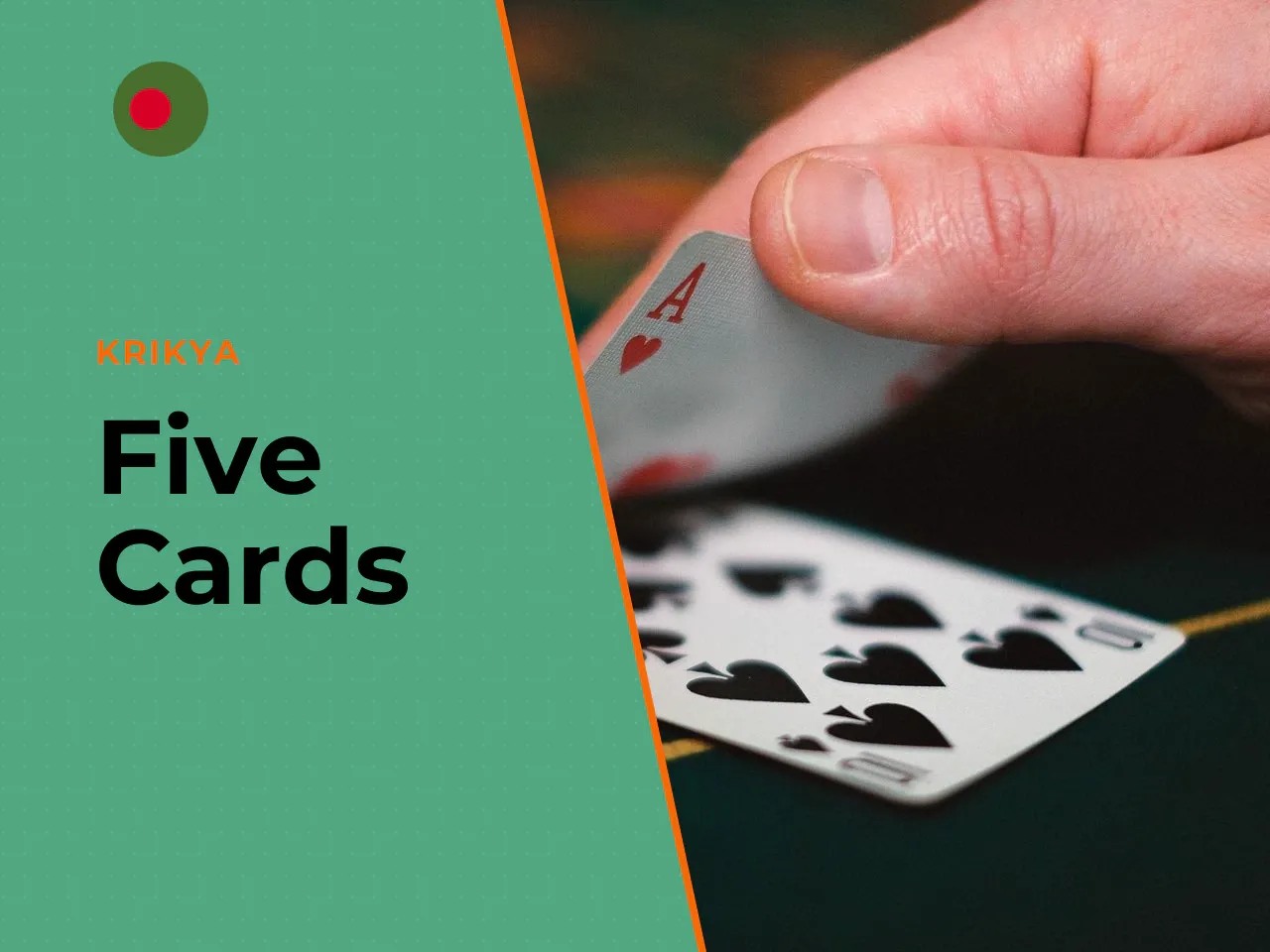
The final winning card hand always consists of exactly five cards, selected from all available options. In Texas Hold'em, for instance, you have access to seven cards — two personal hole cards and five community cards — but only the best five cards count toward your final combination. The "best five cards" rule means a player may use any mix of hole and community cards (0, 1 or 2 hole cards combined with 5, 4 or 3 community cards), as long as the result is the strongest possible hand.
Determining the winner involves comparing these five-card structures. If two players hold equivalent combinations, the server initiates a step-by-step comparison of the highest side card within them — the kicker. A split pot occurs only when players end up with completely identical five-card hands, kickers included. In a licensed environment, cards are evaluated objectively by the platform's algorithm.

When High Card Decides the Winner
If none of the surviving players managed to form even a minimum pair on the board, the pot goes entirely to the participant holding the highest individual card by rank — the high card. Should the top cards match, the dealer compares the second-highest kickers, then the third, until a definitive winner emerges. When all five cards are perfectly equal, the pot is split evenly.
High-card situations crop up more often than you might expect. As professional training materials warn, beginners tend to overvalue a lone ace, calling large bets while a cooler-headed opponent already holds a hidden pair. Learning not to fall in love with a pretty picture card protects your deposit. Build your decisions on pot odds calculations, not emotions.
How Texas Hold'em Poker Is Played Step by Step
Texas Hold'em poker has earned its place as the most popular discipline — both online and offline — heading into 2026. Industry reports from 2024–2025 consistently rank it first by betting volume and table count. The game revolves around two personal hole cards and five community cards. It is within Hold'em that the combinations listed above are assembled from seven available cards. A standard deal progresses through four betting rounds: preflop, flop, turn and river.
"The simplified Team Leduc Hold'em model preserves the key dynamics of poker: decisions under incomplete information, betting and hand comparison." — MIT 6.S890 Team Leduc Hold'em project, 2024.
In the Bangladesh context, where fans are accustomed to analysing the tactics of long sporting tournaments, poker feels like intellectual survival. Decisions are recalibrated as open data appears in the centre of the table.

Quick Reference: 7 Steps of a Single Hand
Before diving into detail, here is the numbered sequence of a complete Texas Hold'em deal:
- Post the blinds. The player to the left of the dealer posts the small blind; the next player posts the big blind.
- Receive two hole cards. The dealer distributes two face-down cards to each player, one at a time, clockwise.
- Preflop betting round. Starting from the player left of the big blind, each player folds, calls or raises.
- The Flop. Three community cards are dealt face-up in the centre of the table; a new betting round follows.
- The Turn. A fourth community card is dealt face-up; another betting round follows.
- The River. A fifth and final community card is dealt face-up; the last betting round takes place.
- Showdown. All remaining players reveal their hands; the best five-card combination wins the pot. If every other player has previously folded, the last player standing wins without showing.
After the showdown, the dealer button moves one seat clockwise, blinds shift accordingly, and the next hand begins.

Hole Cards and the Preflop Round
During the preflop stage each player receives exactly two face-down hole cards, and the first betting round begins with zero community information on the board. At this moment there are no shared cards in sight, and the task is to soberly evaluate the starting potential of your cards — a high pocket pair or suited connectors, for example.
Two players to the left of the dealer make forced bets: the small blind (typically half the minimum bet) and the big blind (equal to the minimum bet), creating a starter pot. The first voluntary action belongs to the player left of the big blind — a position known as "under the gun." That player may fold, call the big blind or raise.
In No-Limit Hold'em the minimum raise must be at least double the big blind, while the maximum is all of the player's chips (all-in).
The preflop round sets the tempo for the entire hand. Experts at iGaming Bangladesh strongly advise newcomers to play no more than 15–20 % of starting hands in this round, ruthlessly folding weak holdings.

Flop, Turn and River with Community Cards
Immediately after the first betting round concludes, the dealer reveals three community cards — the flop. Then comes a fourth — the turn — and finally the fifth — the river. Each street is accompanied by a fresh betting round during which the five community cards progressively sharpen or diminish the probability of your initial hand improving.
The appearance of shared cards fundamentally changes the maths. On the flop you learn whether you have a realistic chance of assembling a profitable poker hand. On the turn and river, bets tend to escalate because the level of informational uncertainty drops.
"Behavioural analysis shows that players adjust betting aggression as community cards appear, yet the preference for rare large pots persists." — Skewness Preferences: Evidence from Online Poker, preprint, 2024.
Online poker software manages these stages automatically, displaying pot size, available actions and a countdown timer for each decision.
Different Poker Games and How They Compare
The global iGaming market offers a variety of poker games, each with its own carefully tuned set of rules — varying the number of hidden and public cards as well as the betting structure. For aspiring strategists, it is critical to understand the mathematical differences between Hold'em and five card formats.
Although hold em dominates by sheer volume, disciplines like Omaha and Five-Card Draw introduce different analytical models. In Omaha each player receives four hole cards, and the final combination must use exactly two of them plus exactly three community cards — which increases variance considerably. In Five-Card Draw there are no community cards at all: a player gets five cards face-down and may exchange some for new ones from the deck.
In Seven-Card Stud each player ultimately holds seven cards — three face-down and four face-up — selecting the best five-card combination from among them.
Comparison of popular poker game formats for beginners
| Format (Game) | Hidden Cards (Hole Cards) | Shared Cards (Community Cards) | Betting Rounds | Beginner Difficulty |
|---|---|---|---|---|
| Texas Hold'em | 2 cards per player | 5 community cards (Flop, Turn, River) | 4 | Medium. Ideal starting point — abundant guides and easy to find a table online. |
| Omaha | 4 cards per player | 5 community cards (must use exactly 2 hole + 3 community) | 4 | High. Massive combinatorics, extreme variance, complex calculations. |
| Five-Card Draw | 5 cards per player | None | 1–2 | Low. Blind exchange, very simple betting structure. |
| Seven-Card Stud | 3 face-down + 4 face-up | None | 5 | High. Requires memorising opponents' exposed cards across multiple streets. |
Purpose: This block helps you visually compare formats and move faster toward studying the mechanics that suit you, without overloading your memory.
Hold'em Poker vs Five Card Formats
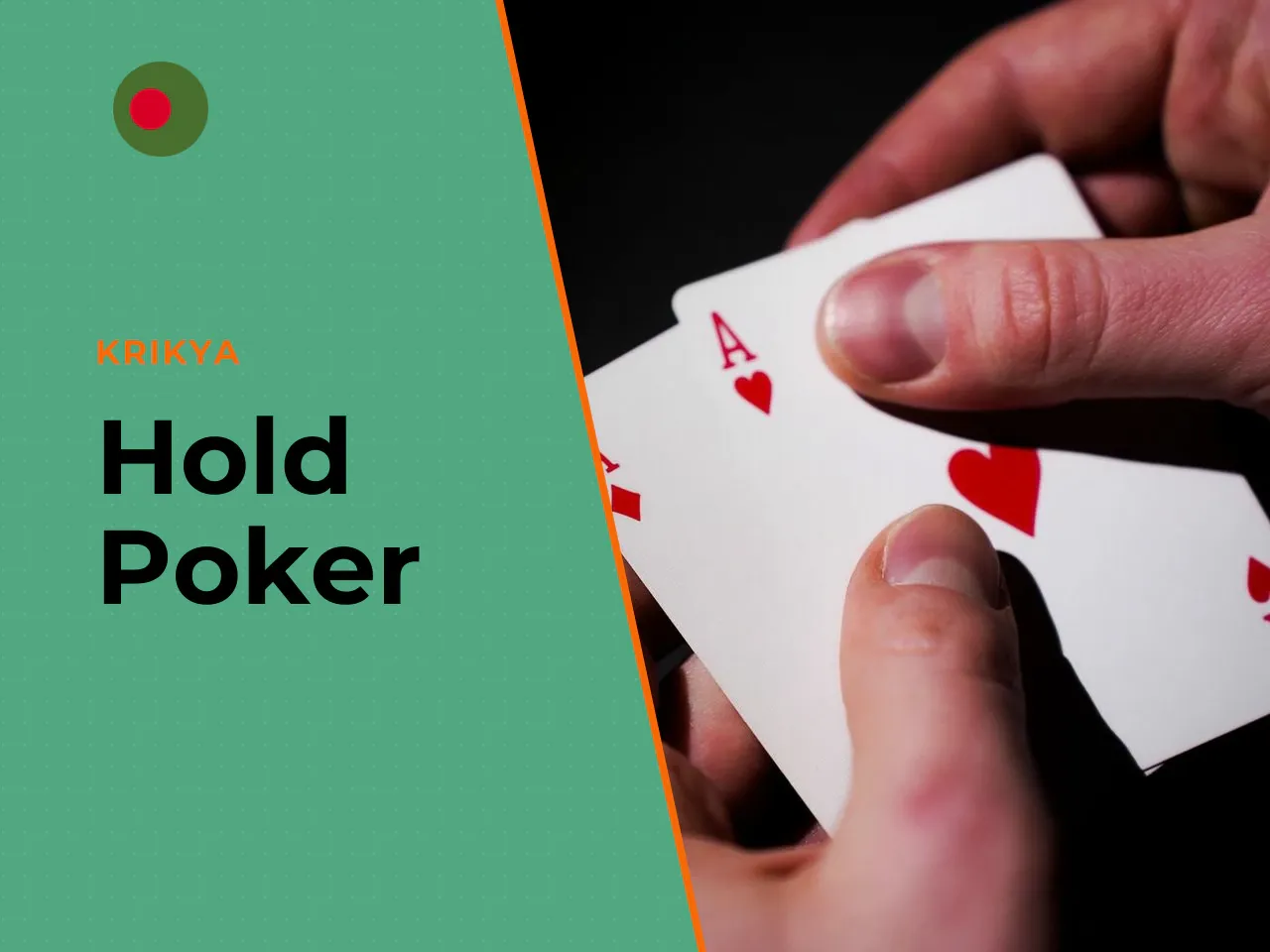
The fundamental mathematical difference between hold em poker and classic five card disciplines lies in the mandatory use of community cards. Shared open cards give players common information about possible combinations, which amplifies the importance of position, hand reading and bluffs based on visible board texture. In conservative Five-Card Draw, participants receive five cards face-down and exchange unwanted ones for new cards from the deck; no shared open cards exist. All cards remain hidden, and strategy relies on probability estimation and psychology without direct observation of a communal board.
Games with community cards sharply reward the skill of reading board structure. In five card mode the emphasis shifts toward psychology and attempts to gauge an opponent's strength purely from the size of their bet. For a first-time player, the Hold'em format is more approachable because of the lower chaos at low limits.
Which Poker Game Is Best for a First-Time Player
For an unprepared beginner, the most logical choice is classic no-limit Texas hold em at safe micro-stakes or in a play-money format. Simple baseline rules, just two starting cards and a massive educational infrastructure make it the ideal launchpad for understanding the philosophy of the game.
Authoritative training systems — Upswing Poker (2024), for instance — confirm that starting with Hold'em cash games lets a newcomer build bankroll awareness most effectively. The cash format provides a clearer understanding of ranges, position and stack management without the complications of a tournament structure. In tournaments the pressure of escalating blinds disrupts the pace of measured learning. Studying a playing strategy is far more productive when your stack is protected by the option to leave the table at any moment. Learn more about real-money play in our real-money online poker section.
Betting Structures in Poker: Limit, Pot Limit and No Limit
The betting structure of a poker game directly shapes the pace of each deal, the intensity level and the starting bankroll you need for a comfortable session. Three key formats exist: limit (strictly fixed), pot limit (capped by the current pot size) and no limit, where the only ceiling is the pile of chips sitting in front of you.
These structures alter playing style in meaningful ways. In a limit game, variance and pot size grow gradually. In no limit, a single mistake can cost your entire stack in one hand. For limit games the recommended bankroll is typically 20–50 big bets, while for no-limit the standard guideline is 50–100 buy-ins.
Fixed Limit and Pot Limit Basics
Fixed limit sets rigid boundaries on bet size and raise increments. In a classic $2/$4 game you may raise only by $2 on the early streets (preflop and flop) and by a maximum of $4 on the later streets (turn and river). The number of raises per round is usually capped at three or four, after which the betting is "capped" and no further raises are allowed.
Pot limit offers more flexibility: you may bet up to the current size of the pot, including all bets and raises in the current round. The number of raises in Pot Limit is not capped, but each raise cannot exceed the current pot.
Limit formats significantly reduce psychological pressure. According to experienced professionals, this is the most methodical format for learning poker without the fear of instantly losing all your chips.
No Limit Poker and Bigger Decision Pressure
No limit poker — the format that keeps gaining popularity — grants each player absolute freedom: you may commit any number of available chips at any moment, up to the dramatic all-in move, after which you remain in the hand only until the showdown. This structure generates intense psychological pressure, because any player sitting across from you can threaten your entire stack with a single bet.
"In no-limit formats, players more frequently choose high-variance strategies, chasing rare large wins, which increases the risk of rapid bankroll depletion." — Skewness Preferences: Evidence from Online Poker, preprint, 2024.
This demanding format dominates top online tables. From a bankroll-management perspective, no limit poker requires a safety cushion of at least 50 buy-ins to absorb the inevitable bad beats. That figure is the generally accepted standard in the poker community, although conservative players prefer to maintain 100 buy-ins. Avoid making these decisions with money you cannot afford to lose until you have internalised the calculation of drawing odds.
Disclaimer: This information is general in nature and does not replace professional advice. Real-money play carries financial risk. Set personal limits and use self-exclusion tools.
How to Play Poker Online and Get Access to the Offer
1
Choose a licensed platform. Confirm that the operator holds a licence from a recognised regulator and uses a certified random number generator.
2
Register and verify (KYC). Complete mandatory identity verification by providing a document confirming your age (18+) and address.
3
Test on free chips. Begin with a free-play mode to familiarise yourself with the software buttons, time-bank mechanics and interface layout.
4
Set deposit limits. Before making your first deposit, configure daily and weekly limits in the Responsible Gaming section.
5
Move to micro-stakes. Transition to tables with minimum stakes ($0.01/$0.02 or $0.02/$0.05) to gain experience at minimal financial risk.
"Regulated online platforms are required to provide responsible gaming tools: deposit limits, self-exclusion and transparent reporting." — Maryland Online Gaming Summary of Findings, 2024.
Public oversight reports confirm that the legal online poker market is tightly regulated. At iGaming Bangladesh we insist: choose only those casino and poker rooms that uphold compliance standards and integrate Responsible Gaming features.

Free Play, Real Money and What to Choose First
Newcomers should begin their online journey in a risk-free play-money mode to learn the software buttons, time-bank mechanics and interface at their own pace. In free-play mode, players often adopt far more aggressive strategies — frequent bluffs and oversized bets — because losses carry no real cost. The result is more chaotic, less realistic gameplay. For that reason, transitioning cautiously to micro-stakes with real money is essential for developing a genuinely profitable strategy, since the psychological weight of actual risk leads to more rational, strategic behaviour.
When we audited onboarding processes internally, we introduced a strict rule for moving from free chips to real money through mandatory daily limits.
According to our editorial data, losses among new players dropped noticeably — though exact figures vary by cohort and cannot be generalised as a universal benchmark.
Temporary free play is excellent for adaptation, but real skill crystallises only when a bet carries financial value. Switching to money games — even for pennies — immediately activates loss-aversion mechanisms that sharpen decision-making.
What Users Get in Online Poker Rooms
In well-developed poker rooms, users gain round-the-clock access to a lobby featuring dynamic cash games, Spin-and-Go formats and multi-table tournaments. The client software — available for free — includes hand-history export, precise bet-sizing sliders and, on many platforms, built-in training tools: hand trainers, simulators and analytical dashboards.
Official poker rooms value active traffic. Many online rooms offer newcomers a welcome bonus of 100–200 % on the first deposit up to a specified amount, unlocked gradually as you earn virtual points through played hands. Regular freerolls — tournaments with no entry fee — also let beginners compete for real money without risking their own funds. It is important to weigh the value proposition before you make your first transaction. Educational materials on the platform — such as iGaming case studies — are also a meaningful part of the service.
Fact Check / Verification: Free-play freerolls carry no financial risk, whereas real-money play is subject to strict legal rules — deposit caps, source-of-funds checks and more. Each poker room sets its own requirements for clearing welcome packages. We strongly recommend reading the terms on official portals before depositing and using self-exclusion tools at the first sign of losing control.
Disclaimer: This information is general in nature and does not replace professional advice. Real-money online poker may be restricted or prohibited in your jurisdiction. Verify local legislation before registering on any platform.

Best Beginner Tips for Playing Poker with Fewer Mistakes
To succeed at playing a poker over the long haul and sidestep costly strategic traps, you need to embed a few foundational habits: play a narrow range preflop (tight strategy), pay relentless attention to your position at the table, and resist the urge to bluff against recreational players who call too often. Most beginner losses stem from trying to outsmart the game's mathematics.
Learning a winning strategy demands focus. Use enforced stop-loss limits: if you drop three starting stacks in a session, close the lobby and calmly review your hand histories. More on platforms with bankroll-protection features in our responsible gaming tools review.
Common Mistakes Each Player Should Avoid
Every player at the beginner stage commits well-documented errors in betting aggression and starting-hand selection. Here are the main ones:
- Excessively wide preflop VPIP. Playing speculative hands is the most common leak flagged by tracking software. Bluff frequency for beginners should stay low, because weak opponents call too often and turn unprofitable bluffs into chip-burning exercises.
- Overvaluing a high card without a strong kicker. Pointless calls with a mediocre high card all the way to the river destroy your win rate.
- Ignoring position. Never enter a pot with weak hole cards from early position (UTG). Late position gives you more information and lets you widen your range safely.
- Lack of pot control. Beginners build enormous pots with just one pair — especially out of position — inflating variance unnecessarily.
- Playing above your bankroll. Sitting at tables where the buy-in represents a significant chunk of your total bankroll is a reliable path to going broke.
"Players systematically overvalue weak hands, calling large bets with a high card where the opponent likely holds a pair or better." — NYU Beginner's Guide to Poker, 2024.
When we implemented tracking in one of the company's internal sports-analytics projects, we observed that cutting ill-considered early-position bets from UTG helped users stabilise their bankrolls noticeably faster — though exact timelines depend on individual style and stakes.

How to Choose the Next Step After Learning the Basics
Once you have thoughtfully absorbed the basics — memorised the formal rules, internalised the hand rankings table and learned to play conservatively in practice — the next step is studying pot odds calculations and reviewing real hand histories. Use free online odds calculators to verify, away from the table, whether your river call was mathematically sound. It is equally important to leverage the built-in statistical and analytical tools within your licensed platform.
Move gradually from play-money simulations to micro-stakes. Combine practice in licensed online poker rooms with reading educational guides and developing an understanding of ranges.
A final recommendation in the sports-first spirit: treat intellectual competitions like poker games as a professional marathon, where the consistent winner is the one who commits the fewest unforced emotional errors while waiting for favourable probabilities.
FAQ — Frequently Asked Questions About Poker
Respuestas renderizadas en formato acorde al diseГ±o exportado: tarjetas oscuras, acento dorado y despliegue compacto.
1 Can I play poker for free before risking real money?
Can I play poker for free before risking real money?
Yes. Most licensed online poker rooms offer a free-play mode with virtual chips. This lets you learn the software, practise hand reading and test basic strategy at zero financial risk. However, because opponents in free play act far more erratically than real-money players, transition to micro-stakes (e.g., $0.01/$0.02) as soon as you feel confident with the interface.
2 How much money do I need to start playing poker online?
How much money do I need to start playing poker online?
At micro-stakes you can begin with as little as $20–$50 if you follow strict bankroll management and sit at tables where the buy-in represents no more than 2 % of your total bankroll. For no-limit games, a safety net of 50 buy-ins is the generally accepted standard.
3 What is the easiest poker format for a complete beginner?
What is the easiest poker format for a complete beginner?
Texas Hold'em cash games at micro limits. You receive only two hole cards, educational resources are abundant, and the cash format allows you to leave the table at any time without losing tournament equity. Authoritative training platforms such as Upswing Poker (2024) and Run It Once confirm this recommendation.
4 Is poker legal in Bangladesh?
Is poker legal in Bangladesh?
Online gambling laws vary by jurisdiction and can change. Before registering on any platform, verify local regulations. Always choose operators that hold a licence from a recognised gaming authority and offer responsible gambling tools such as deposit limits and self-exclusion.
Last updated: 2026. This article is provided for informational and educational purposes only. Poker involves financial risk when played for real money. Always set personal limits, use responsible gambling tools, and verify the legal status of online poker in your jurisdiction before playing.