Roulette Online Guide: How to Play, Bets, Table and Live Roulette
Last updated: July 2025

Last updated: July 2025
«Over the past 8 years of our editorial work we have tested dozens of platforms and formats. The main conclusion: a casino is not a sport where you can analyse a team's physical form. When studying any online game you must rely strictly on mathematics and understand that the house edge is built into the rules themselves. Play responsibly, use limits, and never treat a deposit as an investment.» — Nadia Farzana Haque, Chief Sports Events Editor, iGaming Bangladesh

Key takeaways before you read further:
Casino games are becoming a popular complement to sports betting in Bangladesh. On our portal we apply a sports-analysis approach — facts, statistics and rules first, entertainment second. This transparent guide will help you understand how the roulette game works, what odds roulette online actually offers, and why the demo format is the safest starting point for beginners.
Roulette is a casino table game where outcomes depend on the random landing of a ball in a sector of a spinning wheel. Each round is an independent event. The rules strictly fix payouts for bets on specific numbers or their properties. Understanding the mathematical mechanism behind the roulette wheel and the betting layout — that is the real foundation here.
The roulette wheel consists of individually numbered pockets arranged in a strict, non-sequential order. A European wheel contains 37 pockets: numbers 1 through 36 plus a single green zero. Colours alternate between red and black around the rim, though the alternation breaks at the green zero pocket, which sits between 26 and 32 on the standard European layout.
Why this arrangement? The roulette wheel is deliberately designed so that adjacent pockets mix high and low numbers as well as red and black sectors. This eliminates any predictable pattern a player might try to exploit.
«Mathematical analyses confirm that every spin is an independent event with a uniform probability distribution across all 37 pockets.» — Research-Based Online Roulette Guide (2024)

The green zero sector is the key element. It creates the house edge because it does not belong to any of the standard even-money groups (red/black, even/odd, high/low). On each spin the probability of any specific number landing in European roulette is exactly 1 in 37 — approximately 2.7%. This probability never changes regardless of previous results. Worth repeating: never.
The exact clockwise sequence of numbers on a European wheel is: 0-32-15-19-4-21-2-25-17-34-6-27-13-36-11-30-8-23-10-5-24-16-33-1-20-14-31-9-22-18-29-7-28-12-35-3-26. This deliberate arrangement alternates red and black, and mixes large and small values for maximum randomisation.

A standard round begins when the betting window opens. At this moment the dealer or system announces "place your bets." You predict where the ball will land by placing virtual chips on the relevant areas of the roulette game interface. The dealer spins the wheel in one direction and launches the ball in the opposite direction.
After the phase where bets are accepted before the spin, the system locks the betting function. When the ball drops into a pocket, the system records the winning number. Losing bets are instantly deducted, while winning bets are automatically credited at the game's fixed payout ratios. The whole sequence — from placing chips to seeing results — typically takes under 30 seconds in RNG mode.
Roulette demo is an essential learning stage with zero financial risk. This mode fully replicates the mechanics of a real-money session. You test interface features of online roulette games, get comfortable with the pace, and observe how bets are settled when zero lands. A demo account helps you internalise the rules without pressure (18+).
«Demo roulette uses the same RNG as the real-money version, allowing players to observe how outcome frequencies converge with theoretical probabilities — without any financial consequences.» — Research-Based Online Roulette Guide (2024)
What to test in demo mode before risking real funds:

One thing I have noticed during our platform reviews: players who spend at least 50 demo spins before depositing tend to make far fewer impulsive mistakes once real money is on the line.
The transition to real-money play changes a player's psychology. When testing a roulette online casino, you face genuine financial risk. Before depositing funds make sure to check the table limits, bet-processing speed, and availability of session-control tools.
«Research on online casino data shows that the move to real-money play is associated with increased deposit frequency, rising stakes, and chasing of losses.» — Research-Based Online Roulette Guide (2024)
During our platform audits we noticed that beginners often drain their balance within minutes. We recommend activating strict time-outs and deposit limits in your account settings. Using responsible-play tools on iGaming platforms can materially reduce impulsive betting behaviour — though the exact impact varies by player and platform, so treat every session as a budgeted entertainment expense, not an income opportunity.
The roulette field is divided into a central number grid and outer rectangles for broader predictions. Players place chips on this layout, and the exact position on the roulette table strictly determines the potential odds and returns.
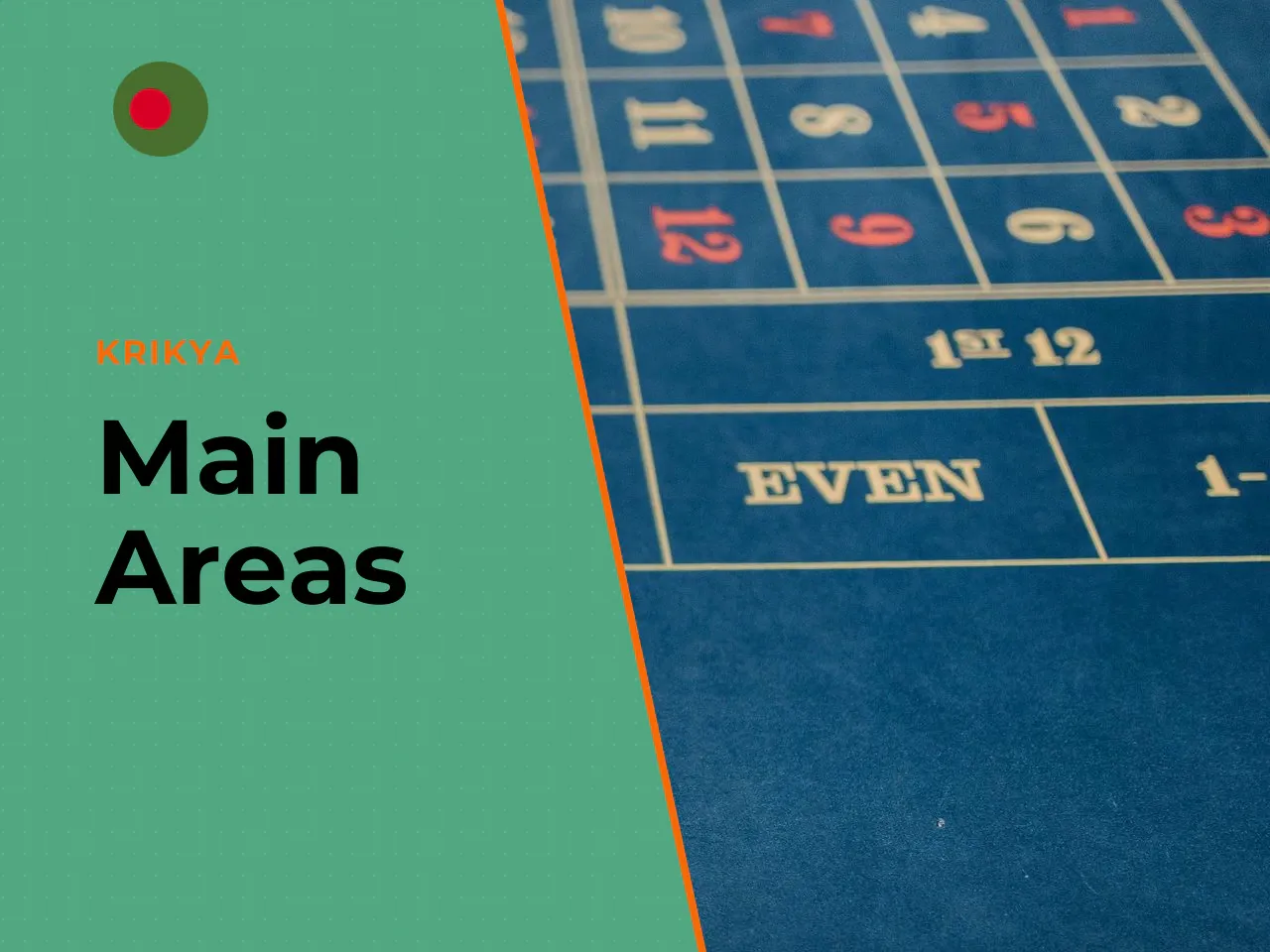
The central section contains 36 numbers arranged in three columns of twelve rows. The zero sector sits at the top of the grid. In the lower and side portions of the table you will find additional boxes: column bets and dozens bets, as well as six even-money boxes — colours (red/black), ranges (1–18 / 19–36), and parity (even/odd).
Each dozen covers exactly 12 numbers (1–12, 13–24, 25–36), and each column also covers 12 numbers running vertically through the grid. You must clearly understand which group your target sector belongs to — this is what separates a deliberate bet from a random click.

The placement of your chip geometrically changes your risk profile. A chip placed in the centre of a numbered square is a straight-up bet on a single number. Move the chip onto the line between two adjacent numbers, and the bet automatically becomes a split, covering two numbers with a 17:1 payout. Place the chip at the corner where four numbers meet and you have a corner bet covering four numbers at 8:1.
This positional mechanic is universal across all roulette table layouts — physical and digital. Think of it this way: the table is not just a picture, it is a functional map. Where you drop the chip defines everything about your wager.
All options at the table fall into two global categories: inside the number grid and outside it. Inside bets carry high volatility and a low win frequency. Outside bets cover large groups of numbers — they hit more often but return smaller profits.

Inside positions cover between one and six specific numbers:
These formats involve long losing streaks. The expected value of a straight-up bet in European roulette is −1/37 of the stake — that is, −2.70%. And here is the thing that surprises many newcomers: this expected value is identical to every other bet on the table.
«Inside bets are characterised by high risk per unit staked; the expected value of all bets is identical and negative.» — Research-Based Online Roulette Guide (2024)
Outside groups hedge your variance. A bet on red or odd covers 18 sectors out of 37. Thanks to the wide coverage your bankroll does not collapse as quickly. However, the green zero wipes out any chance of a mathematical edge for the player. Consistent profit is simply not possible here.
Using progressive systems such as the Martingale is extremely dangerous because of table maximum limits. A streak of seven or eight consecutive losses — which happens more often than most people expect — can push the required wager past the cap and collapse the entire strategy.
«Analysis of casino data confirms that players who employ stake-doubling systems incur significant losses during rare but inevitable long losing streaks.» — Research-Based Online Roulette Guide (2024)
The casino's advantage is hard-wired into the payout structure. The wider you spread your chips, the lower the payout multiplier — but the house's overall share remains insurmountable.
| Bet Type | Numbers Covered | Payout | Probability (European) | House Edge |
|---|---|---|---|---|
| Straight-up (single number) | 1 | 35:1 | 2.70% | 2.70% |
| Split (two numbers) | 2 | 17:1 | 5.41% | 2.70% |
| Street (three numbers) | 3 | 11:1 | 8.11% | 2.70% |
| Corner (four numbers) | 4 | 8:1 | 10.81% | 2.70% |
| Six Line (six numbers) | 6 | 5:1 | 16.22% | 2.70% |
| Dozens / Columns | 12 | 2:1 | 32.43% | 2.70% |
| Red/Black, Even/Odd, 1–18/19–36 | 18 | 1:1 | 48.65% | 2.70% |
Disclaimer: The information in this section is for general educational purposes only and does not constitute financial or professional gambling advice. Roulette is a game with a negative expected value. Play responsibly, set hard limits, and seek help if you notice signs of problem gambling.
The presence of zero fundamentally shifts the statistics. Without it the probability of guessing a colour would be exactly 50%. The single zero pocket pushes your chance of winning an even-money bet down to 48.65%. The casino still pays you 1:1 when you win, but that fractional difference — just 1.35 percentage points — generates the house's steady profit over the long run. There is no arguing with the mathematics.
«A 2022 experimental study showed that explicitly providing players with house-edge and volatility information prompted some of them to choose less risky options.» — cited in Research-Based Online Roulette Guide (2024)
«A 2025 study found that most players misinterpret the RTP metric, expecting it to materialise within a short session rather than over the long term.» — "Never tell me the odds: Typical return-to-player information" (2025), cited in Research-Based Online Roulette Guide (2024)
Payout size is inversely proportional to risk. By wagering a chip for a 35× multiplier you are playing with extremely rare probabilities. When treating play roulette as a form of leisure, it is wiser to balance between wide outside fields and targeted inside numbers. No combination of bets can make a session guaranteed positive — not even a clever mix of both categories.
E-E-A-T Fact Check: Every spin outcome is random. Compensation strategies cannot overcome the house edge, and RNG algorithms are tested annually by independent auditors such as eCOGRA and iTech Labs. Roulette provides an exclusively entertainment experience. Licensed platforms do not promise income, and players should completely avoid inflated expectations.
The choice of format is the only independent decision that can optimise your losses. The rules of different versions are similar, but the devil lies in the wheel structure and game tempo.
The European version uses 37 pockets and a single zero, keeping the house edge at 2.70% and the theoretical RTP at 97.30%. The American roulette wheel has 38 pockets, introducing a double zero (00). This lowers the player's RTP to approximately 94.74% and raises the house edge to 5.26% — nearly double the European figure.
«RNG roulette simulations confirm: in the European version a straight-up bet wins in 2.7% of spins; in the American version less often, and expected losses are higher per unit staked.» — Research-Based Online Roulette Guide (2024)
When observing regional analytics we consistently recommend ignoring American lobbies. Using the European format extends the duration of mindful play without early frustration for your bankroll. Put simply: why accept double the disadvantage for the same entertainment?
French roulette uses the same 37-pocket wheel as European roulette but introduces the La Partage rule: if the ball lands on zero, half of any even-money bet is returned to the player. This effectively cuts the house edge on red/black, odd/even, and high/low wagers to just 1.35% — the lowest of any standard roulette variant. Some tables also offer the En Prison rule, where an even-money bet remains "in prison" for the next spin rather than losing outright.
French tables additionally feature a racetrack-shaped betting area for call bets (also known as announced bets):

These call bets are commonly available in both French and European online lobbies and offer a convenient way to cover specific wheel sectors with a single click. If you have never tried them, the racetrack interface feels surprisingly intuitive once you see it in action.
Standard RNG software uses a hidden program generator without a video feed, whereas live roulette streams a real dealer from a professional studio. Empirical data confirm that the win rate for a straight-up bet in live roulette is approximately 2.7% — identical to the RNG format. The difference lies purely in experience and pace.
«Live-session data show that average session duration at a live table is roughly twice that of an RNG table, increasing the cumulative effect of the house edge on the player's bankroll.» — Research-Based Online Roulette Guide (2024)
Modern live studios offer multiple camera angles — including a close-up macro view of the ball dropping into the pocket — and a built-in chat for communicating with the dealer and other players. This recreates the social atmosphere of a land-based casino without leaving your home. However, the slower pace of live play (roughly 15–20 seconds per betting window) is compensated by stronger psychological immersion, so strict compliance and bankroll control remain vital.
Choosing the right format matters more than most beginners realise. Each mode — demo, standard online roulette games, or live tables — serves a different purpose and suits a different stage of your experience.

Roulette demo is the best choice whenever you are learning something new. First time with the game? Demo. Trying a new platform? Demo. Want to test a particular bet combination without financial consequences? Also demo.
The mechanics are identical to real-money play: the same RNG, the same table layout, the same payout logic. The only difference is that your balance is virtual. This makes demo mode perfect for building muscle memory with the interface — learning where to click, how fast the betting window closes, and what happens when zero lands on your even-money bet.
A practical tip: set yourself a target of at least 50–100 demo spins before considering any deposit. By that point you will have a solid feel for the roulette game's rhythm and your own betting tendencies.

Live roulette is worth choosing when you want the atmosphere of a real casino roulette experience — the physical wheel, the dealer's voice, the social interaction through chat. It suits players who already understand the rules and want a more immersive session.
That said, live tables come with a trade-off. The pace is slower, which means fewer spins per hour. Fewer spins might sound like a good thing for your bankroll, but the longer session duration and stronger emotional engagement can lead to extended play. The cumulative effect of the house edge grows with time, so setting a firm session limit before you join a live table is not optional — it is essential.
| Scenario | Best Format | Why |
|---|---|---|
| First time learning rules | Demo | Zero financial risk; same RNG mechanics as real play |
| Practising bet placement | RNG real-money (low stakes) | Faster rounds; no social pressure; full control of tempo |
| Want an authentic casino atmosphere | Live roulette | Physical wheel, real dealer, chat interaction |
| Checking a new platform's interface | Demo | Test limits, payout display, and controls before depositing |

Before you commit real money, learn from the errors almost every new player makes:
Disclaimer: Online gambling is regulated by the laws of your country of residence. Verify the legality of play in your jurisdiction before registering on any platform. The information below is general in nature and does not replace professional legal or financial advice.
Before accepting an offer you must verify the operator's licence and study the legal terms. No interface should bypass local regulations or create grey transactional zones.
Modern software includes interface elements such as racetrack pads for announced bets, recent-number statistics panels, and a quick Re-bet button to restore your previous chip layout. A legitimate online roulette game client must also contain Responsible Gaming settings: from self-exclusion to per-session deposit and loss limits. The presence of an eCOGRA or iTech Labs certification seal is a reliable quality marker.
«A 2024 report from Morgan State University's Center for DASGR notes that the legalisation of interactive gaming is accompanied by a rise in gambling-related disorders when player-protection measures are insufficient.» — cited in Research-Based Online Roulette Guide (2024)
Look for platforms that offer a genuine variety of roulette games — European, French, and live options — alongside flexible table limits that suit your budget. The ability to switch seamlessly between demo and real-money modes within the same lobby is another sign of a well-designed casino roulette platform.
When evaluating bonus terms, read the wagering-contribution rules carefully. In most roulette promotions, table-game bets count for only 10–20% of the wagering requirement, while slot bets typically count at 100%. A x30 wagering requirement on a $100 bonus means you would need to place roulette bets totalling $15,000–$30,000 before any withdrawal is possible. That is a significant volume — and most players underestimate it.
«A 2025 study established that most players incorrectly interpret the RTP figure, expecting it to materialise within a single session rather than over thousands of spins.» — "Never tell me the odds: Typical return-to-player information" (2025), cited in Research-Based Online Roulette Guide (2024)
Look for verified platforms for playing roulette with transparent lobby access, a range of table limits, and a locally verified regulatory background. For beginners, prioritise platforms with strong demo access and clear responsible gaming tools. For live-focused players, check the number of available live roulette tables and the range of betting limits offered. Play for the experience on a dedicated entertainment budget, and abandon any attempts to beat mathematical probability.
| Term | Definition |
|---|---|
| Bankroll | The total amount of money a player sets aside for gambling in a given session or period. |
| House Edge | The mathematical percentage the casino expects to retain from every bet over the long run. |
| RTP (Return to Player) | The theoretical percentage of total wagers returned to players over time (e.g., 97.30% for European roulette). |
| RNG | Random Number Generator — the software algorithm that determines outcomes in digital roulette. |
| Wager / Wagering Requirement | The number of times a bonus must be bet before winnings can be withdrawn. |
| Split | An inside bet covering two adjacent numbers, placed on the line between them. |
| Street | An inside bet covering three numbers in a horizontal row. |
| Corner | An inside bet covering four numbers, placed at the point where four squares meet. |
| La Partage | A French roulette rule returning half of an even-money bet when zero lands. |
| Call Bets (Announced Bets) | Pre-defined sector bets (Voisins, Tiers, Orphelins) placed via the racetrack layout. |
| Even-Money Bet | Any outside bet that pays 1:1 — red/black, odd/even, or 1–18/19–36. |
| Croupier / Dealer | The person (or automated system) who manages the wheel, ball, and betting process. |

Roulette is one of the most elegant casino games — but elegance does not change the mathematics. The house edge is permanent, every spin is independent, and no staking plan can turn a negative-expectation game into a profitable one.
Your safest next steps:
If you or someone you know is struggling with gambling behaviour, please reach out to a support service such as GamCare or Gamblers Anonymous.
Respuestas renderizadas en formato acorde al diseГ±o exportado: tarjetas oscuras, acento dorado y despliegue compacto.